
Latest audit record
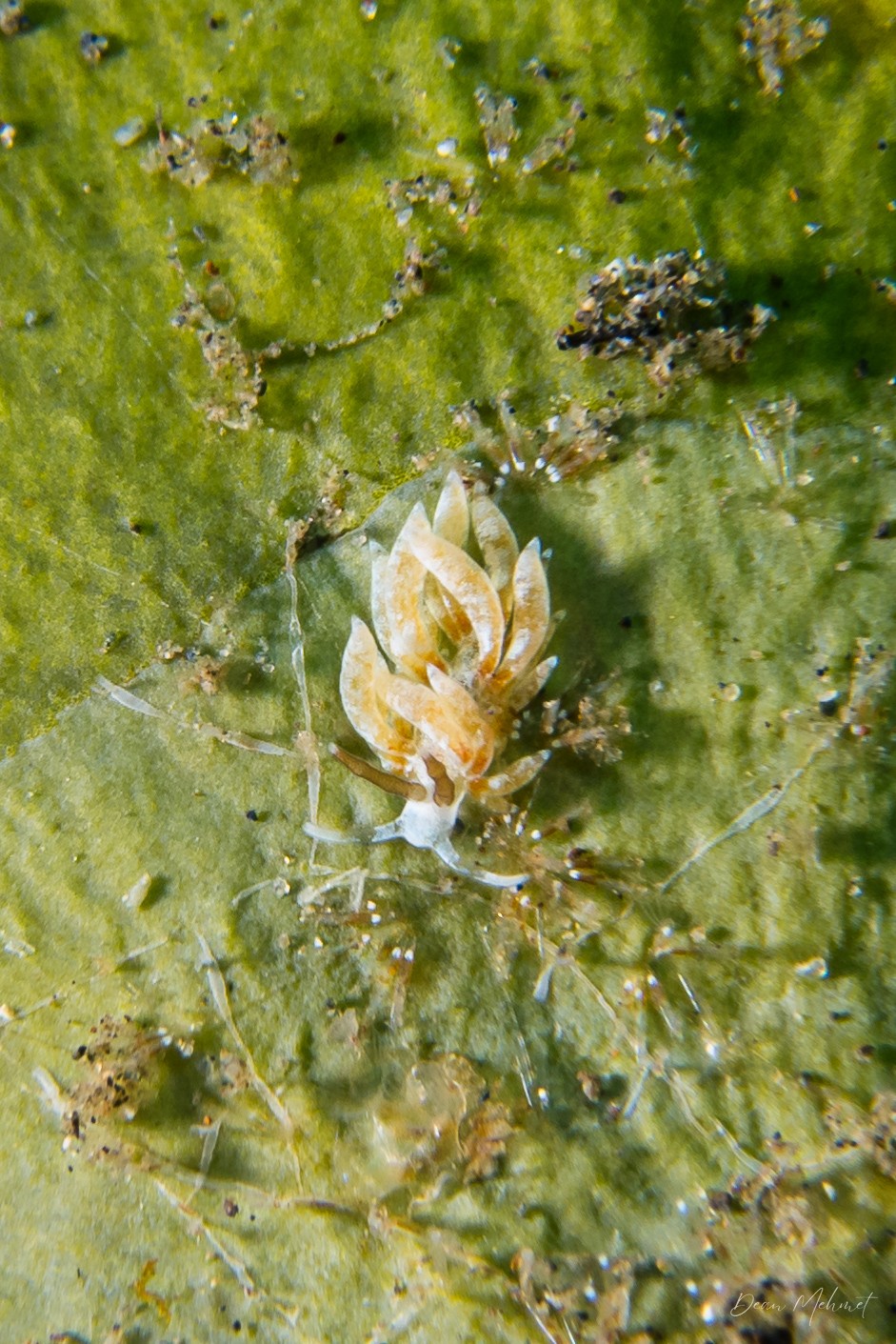
Conclusion: Phyllodesmium sp.
Reviewed by Codex identification research on Aug 27, 2026 · 78% reviewer confidence.
Reasoning recorded at review
- Small pale aeolid with long smooth oral tentacles and rhinophores
- Broad flattened leaf-like cerata arranged in compact dorsal groups
- Brown-orange digestive pigment visible through the cerata
- Ceratal form is more consistent with octocoral-mimicking Phyllodesmium than the machine-suggested Tenellia
Alternatives considered
- Other Myrrhinidae
Why plausible: The soft frame does not fully resolve ceratal insertions or cnidosac morphology
Comparison: Sharper lateral and dorsal views are needed
- Tenellia or another fionid
Why plausible: A very small aeolid can be distorted by viewing angle
Comparison: Rhinophore, jaw, radular and ceratal anatomy would resolve the family
Evidence limits & sources +−
- • Animal is small and focus is soft
- • Host organism is not established
- • No radular, reproductive or DNA evidence


